A Step-by-step Guide to PCB Assembly Testing & Inspection
PCB assembly testing methods are essential to the manufacturing process.
We are constantly adjusting and improving our testing methods alongside failure analysis. We will describe in detail the various PCB test methods. This guide is intended to provide a concise and informative compilation of these insights.
1.Incoming Quality Control
(1)Purpose: PCB assembly materials include PCB substrates and electronic components.
Verify that the materials used meet all performance, specification, and reliability requirements.
(2)Inspection Content:
You can detect some issues in advance by inspecting the incoming materials.
You must check the packaging and silkscreen of the component before assembly. You need to inform the supplier if the pins of the component oxidize and order replacements in time.
You must verify that the electrical parameters of the components meet the standard before assembly.
You should check the pad flatness and thickness of the PCB before PCB assembly. Check the surface coating and via quality.
2.Stencil Inspection
(1)Purpose: Ensure the stencil remains clean. Confirm that SMT stencil tension and aperture precision meet specified process parameters.
(2)Inspection Content:
Confirm stencil aperture dimensions follow design-specified process requirements. Tests include shape, aperture size, and placement tolerance.
Make sure the stencil is clean and free from contaminants or solder paste residue.
Check stencil tension with a tensiometer for consistent printing.
3.Solder Paste Inspection (SPI)
(1)Purpose: The goal of SPI is to inspect solder paste printing quality. It also prevents soldering defects like excessive/insufficient solder, bridging, and misalignment.
(2)Inspection Content:
Check that the paste volume and the thickness correspond to the specifications. Position the solder correctly. The solder paste shape should also match the print specifications.
You need to fix the misaligned solder paste as soon as possible.
Also, you need to check the edge clarity as well as the presence of bridging.
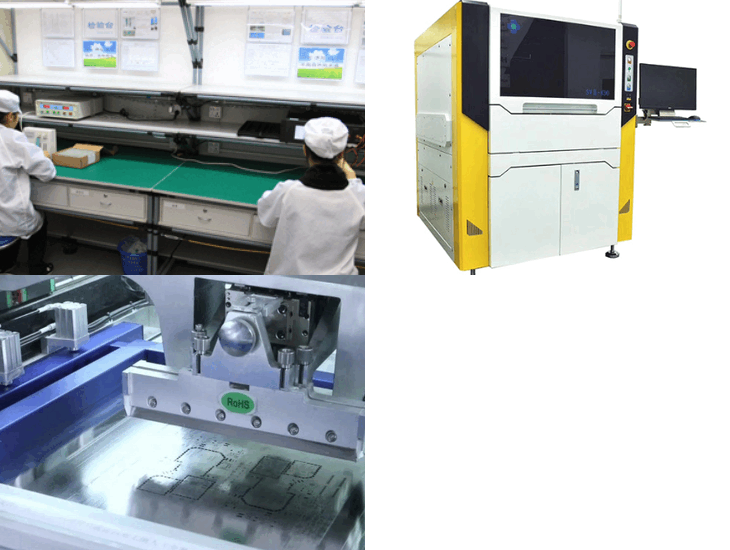
incoming quality control, stencil inspection and solder paste inspection
4.In-Line Automated Optical Inspection (In-Line AOI)
(1)Purpose: After reflow soldering, surface mount defects can be identified immediately. This allows for immediate feedback on the process. AOI inspects PCBs using 2D or 3-D cameras. The board is not powered and some components are missing.
(2)Inspection Content:
You can detect misplaced or missing components immediately with in-line AOI. This is also useful for checking component polarity, skewing and tombstoning.
You can detect defects early by using in-line AOI. You can immediately rework defects such as bridging and pad contamination.
AOI systems detect other defects using machine vision and cameras. Open circuits, pad damage, and lead deformation can all be detected quickly. It helps reduce the errors and costs that come with PCBs that are faulty.


评论
发表评论