Inverter PCBs: Design, Types, Key Specifications and More
In the rapidly evolving landscape of electronics, the ability to efficiently convert direct current (DC) into alternating current (AC) is paramount. This critical function is primarily handled by an often-overlooked yet incredibly sophisticated component: the Inverter Printed Circuit Board (PCB). These specialized PCBs are the technological heart of countless devices, from renewable energy systems to everyday household appliances. Understanding their types, selection criteria, and intricate design considerations is essential for anyone involved in modern power electronics.
This comprehensive guide delves into the world of Inverter PCBs, exploring their fundamental role, the various types available, their primary components, and the crucial design principles that ensure their optimal performance and reliability. Whether you’re an engineer, a student, or simply curious about the technology powering our world, this article will provide valuable insights into the core of power conversion.
1. What Is an Inverter PCB?
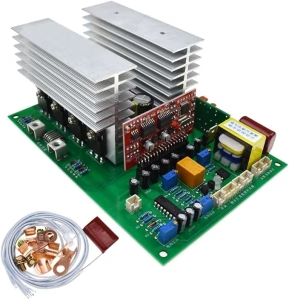
An Inverter PCB serves as the central control unit for an inverter circuit, which is an electronic device designed to convert DC power into AC power . This conversion is fundamental for powering a vast array of AC-driven equipment from DC sources, such as batteries, fuel cells, or solar panels. Essentially, the Inverter PCB manages the switching of power electronic components (like MOSFETs or IGBT s) to create an alternating waveform, often a sine wave, from a steady DC input.
Beyond simple conversion, modern Inverter PCBs incorporate complex control logic, often managed by microcontrollers or Digital Signal Processors ( DSPs), to regulate output voltage, frequency, and waveform purity. They are engineered to handle significant power levels while ensuring efficiency, stability, and protection against various electrical faults.
2. Benefits of an Inverter PCB
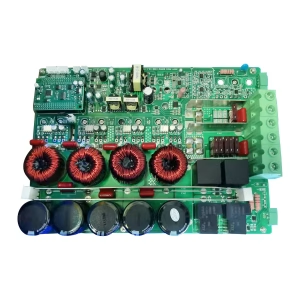
The strategic use and meticulous design of Inverter PCBs yield several significant advantages:
- Enhanced Power Efficiency:Optimized layouts and component placement minimize power losses, leading to higher energy conversion efficiency. This is crucial for battery -powered systems and renewable energy applications where every watt counts.
- Increased Reliability:Robust design, proper thermal management, and quality component selection contribute to the longevity and stable operation of the inverter, reducing the likelihood of failure in demanding environments.
- Compact and Space-Saving Design:PCBs allow for the integration of numerous components into a small footprint, leading to more compact and lighter inverter units, which is vital for portable devices and space-constrained applications.
- Versatility and Customization:Inverter PCBs can be tailored to various power levels, voltage requirements, and application-specific features, offering designers immense
- Superior Thermal Management:Thought ful PCB design facilitates efficient heat dissipation, preventing component overheating and ensuring long-term performance, especially in high-power applications.
- Improved Electromagnetic Compatibility (EMC):Proper layout and grounding strategies on the PCB help mitigate electromagnetic interference (EMI) and ensure the inverter operates without disrupting other electronic systems.
- Cost-Effectiveness at Scale:While initial design might be complex, mass production of well-designed Inverter PCBs can be highly cost- effective, particularly for consumer electronics and industrial applications.


评论
发表评论