A Detailed Overview of Copper Clad Laminate

1. What is Copper Clad Laminate?
Copper Clad Laminate (abbreviated CCL) is a base material for PCBs. A copper-clad panel is made by laminating glass fiber or wood paper with copper on one or both sides after the material has been soaked in resin.
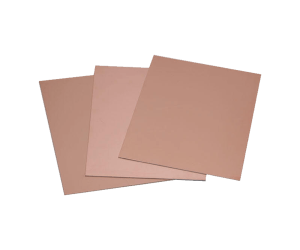
2. How are CCLs classified?
CCLs are classified according to different standards.
- We have rigid CCL (FR-4 CEM-1, etc.) based on the mechanical rigidity of CCL. Flex CCL. Flex PCBs rely on flex and rigid CCLs.
- We have organic resin CCL in FR-4 (FR-4), CEM-3 (CEM-3), etc., metal-base CCL, ceramic-base CCL, etc.
- We have two types of CCL based on thickness. The thickness of the former must be at least 0.5mm, while that of the latter may be less than 0.5mm. The CCL thickness does not account for copper foil thickness.
- We have glass fiber cloth CCL, paper CCL, and compound CCL.
- We have two types of CCL based on the insulation resin used: Phenolic (FR-1,XPC) and epoxy CCL.
3. What makes a good CCL?
CCLs can only meet performance requirements when they are able to cater to the following:
- Appearance. Unexpected elements in the production process, like dents or scratches, resin points, wrinkles, pinholes, bubbles, etc., might have an impact on copper foil. These issues will all result in a poor CCL and, eventually, a PCB.A CCL that is excellent should have a flat, smooth appearance.
- Size. As CCLs are the base material for PCBboards, they must conform to the size requirements of PCBs. The size of CCLs is determined by several parameters, including length, width, and diagonal deviation.
- Electrical performance. It is essential that a PCB achieves this mission. Therefore, any factor affecting the electric performance of the board must be designed carefully. This includes dielectric constant, dielectric loss tangent, volume resistance, surface resistivity, insulation resistance, and arc resistance.
- Performance. The physical performance of CCLs is determined by dimensional stability (PS), peel strength (PS), bend strength, heat resistance, thermal stress (Td, T260, T288, and T300), punching qualities, etc.
- Chemical Performance. The chemical performance of CCLs must meet requirements such as flammability and chemical resistance to reagents, Tg, Z axis coefficient thermal expansion (Z CTE), dimensional stabilities, etc.
- Environmental performance. It must meet the requirements of water absorption, etc.
PCB Fab Houses should perform CCL quality judgment. AssemblePCB, for instance, uses IPC-4101C for manufacturing standards and IPC-TM-655 for CCL tests. CCLs are therefore qualified as PCB substrates when they meet these standards.
4. Prepreg: What is it?
Prepreg is the reinforcing material found within a CCL. It is baked and composed of glass fiber. Some people call it a bonding sheet, and it is composed of epoxy resin, DMF cloth, 2MI, Acetone, etc.
Classification of prepreg. There are many classification standards for prepreg.
1). Based on glass fibre cloth: 106; 1080; 2112; 2116. 1500 and 7628.
2). Based on the resin used and its performance, POLYCLAD Turbo254/226, ISOLAFR402/FR406,ITEQIT180, Sheng YiS1141-140/170
Resin Classification
1)Phenolic resin
2)Epoxy resin
3)Polyimide resin
4) Polytetrafluorethelene resin (PTFE or TEFLON resin)
5) Bismaleimide triazine (BT)
Glass Fiber is characterized by the following attributes:
1)High intensity
2) Fire and heat resistance
3) Humidity Resistance
4) Excellent insulation capabilities
Factors that affect the quality of prepreg. A high-quality prepreg will lead to a high-quality PCB, and then CCLs. AssemblePCB is very concerned with the quality of prepreg, and tests and controls it in terms of resin, gel time, and resin fluidity.
Select prereg according to cost. Glass fiber cloth is the main factor in the high cost of prepreg. In general, prepreg costs are directly correlated with the thickness and quality of the glass fiber cloth. The cost of prepreg increases as the thickness of the cloth decreases. Prepreg 1080 is cheaper than prepreg 1112 because it is rarely used.


评论
发表评论