The Complete Guide of PCB Assembly for Wearable Devices
Wearable technology has rapidly evolved from niche gadgets to mainstream essentials, encompassing everything from smart watches and fitness trackers to medical patches and augmented reality glasses. The core of these compact, sophisticated devices lies in their Printed Circuit Boards (PCBs). Unlike traditional electronics, wearable devices demand PCBs that are not only miniaturized but also flexible, durable, and capable of operating reliably in dynamic environments.
The unique requirements of wearable devices present significant challenges and opportunities for PCB assembly. Designers and manufacturers must navigate a complex landscape of material selection, intricate design considerations, and advanced assembly techniques to create robust, high-performance electronics that seamlessly integrate with the human body and everyday life. This comprehensive guide delves into the critical aspects of PCB assembly for wearable devices, offering insights into material choices, design best practices, assembly processes, and quality assurance.
1. Introduction of Wearable PCB
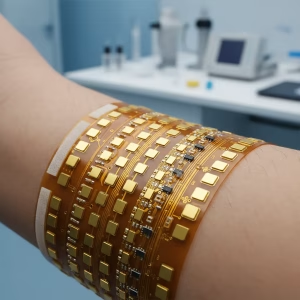
Wearable PCBs are electronic core circuit boards specifically designed for wearable smart devices (such as smartwatches and health monitoring patches). Their core definition lies in meeting two key requirements simultaneously: extreme miniaturization and adaptability to physical environments, ensuring reliable operation even when the device is bent, twisted, or exposed to sweat. Traditional rigid circuit boards (such as FR-4) cannot meet these demands, thus giving rise to new PCB technologies centered on flexibility and stretchability.
https://assemblepcb.com/blog/the-complete-guide-of-pcb-assembly-for-wearable-devices/


评论
发表评论