Mastering Electrolytic Capacitor Selection: Your Ultimate Guide
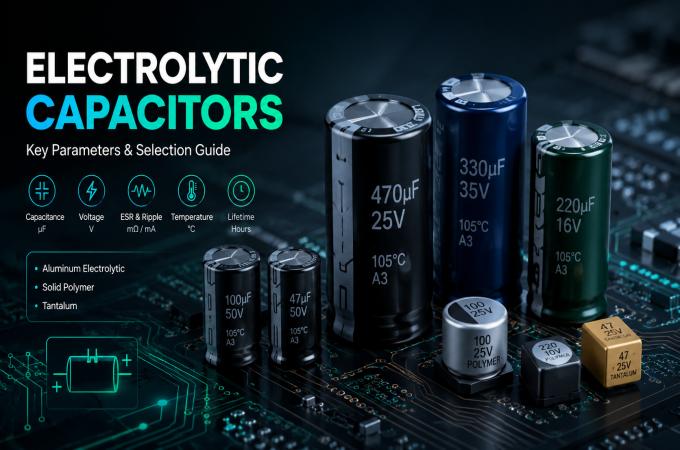
1. Introduction
In the intricate world of electronics, certain components are truly indispensable, and among them, electrolytic capacitors (E-caps) hold a critical position. Known for their ability to pack high capacitance into a relatively small volume, E-caps are the workhorses in countless applications, from robust power systems to crucial low-frequency filtering. However, the sheer variety and specific characteristics of these components mean that choosing the ideal capacitor is far from a trivial task.
For any engineer involved in PCB design, a systematic approach to capacitor selectionis paramount. It extends beyond merely matching a capacitance value; it’s about striking a delicate balance between electrical performance, transient response, and practical considerations like PCB area, cost, and ultimately,component reliability. Missteps in this process can lead to reduced circuit efficiency, shorter product lifespans, and even catastrophic failures.
This comprehensive guide aims to equip you with the knowledge needed to navigate the complexities of selecting electrolytic capacitors. We’ll delve into their fundamental principles, dissect key parameters like ESR and ripple current, explain critical concepts such asvoltage derating, and provide a practical framework to ensure your selections contribute to robust and long-lasting designs. Let’s move from theoretical understanding to confidentbill of materials (BOM) preparation.
2. Understanding Electrolytic Capacitors
At their core, electrolytic capacitors are specialized types of polarized capacitors, meaning they must be installed with correct polarity relative to the DC voltage in a circuit design. Their operational mechanism relies on a very thin dielectric layer formed through an electrolytic oxidation process. This thin dielectric is key to achieving high capacitancevalues in a compact form factor.
Types of Electrolytic Capacitors
The world of electrolytic capacitors is diverse, primarily categorized by their anode material and electrolyte type. The two major families are aluminum electrolytic capacitors and tantalum capacitors, each with unique characteristics and typical applications.
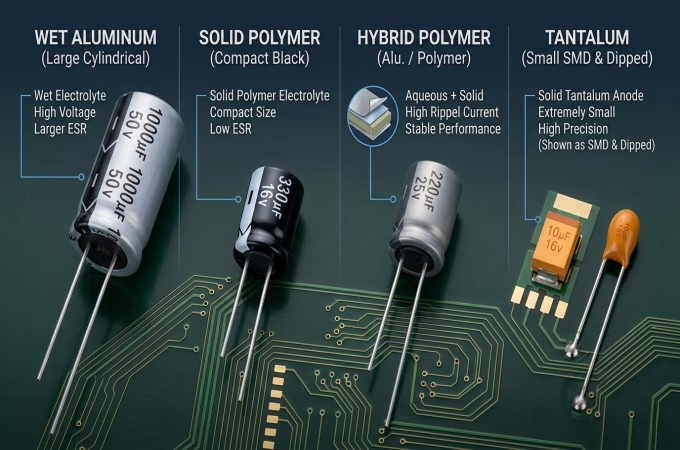
- Aluminum Electrolytic Capacitors: These are the most common type and come in several variants:
- Wet (Liquid) Electrolyte: The most traditional and widely used. They offer high capacitance, are cost-effective, and tolerate high ripple currents. However, they are susceptible to drying out over time, especially at elevated temperatures, leading to degradation.
- Solid Polymer Electrolyte: Utilizing a solid conductive polymer instead of a liquid, these capacitors boast significantly lower ESR, better stability over temperature, and a longer lifespan. They are often found in high-frequency applications like DC-DC converters.
- Hybrid Polymer Electrolyte: Combining the benefits of both wet and solid types, these offer lower ESR and higher ripple current ratings than wet types, while also being more robust than solid polymers in certain conditions.
- Tantalum Capacitors: Known for their excellent volumetric efficiency (high capacitance in a small size), high stability, and low ESR. They are typically used in smaller, more critical applications. However, they are generally more expensive and have specific failure modes if over-voltage or reverse-voltage conditions occur.
Electrolytic capacitors also come in various physical forms, often dictated by their intended application and mounting requirements on the PCB. Common form factors include radial, axial, snap-in, and computer-grade types. Radial leaded capacitors are prevalent for general-purpose board mounting, while snap-in versions are typical for larger, higher-voltage applications in power supplies.


评论
发表评论